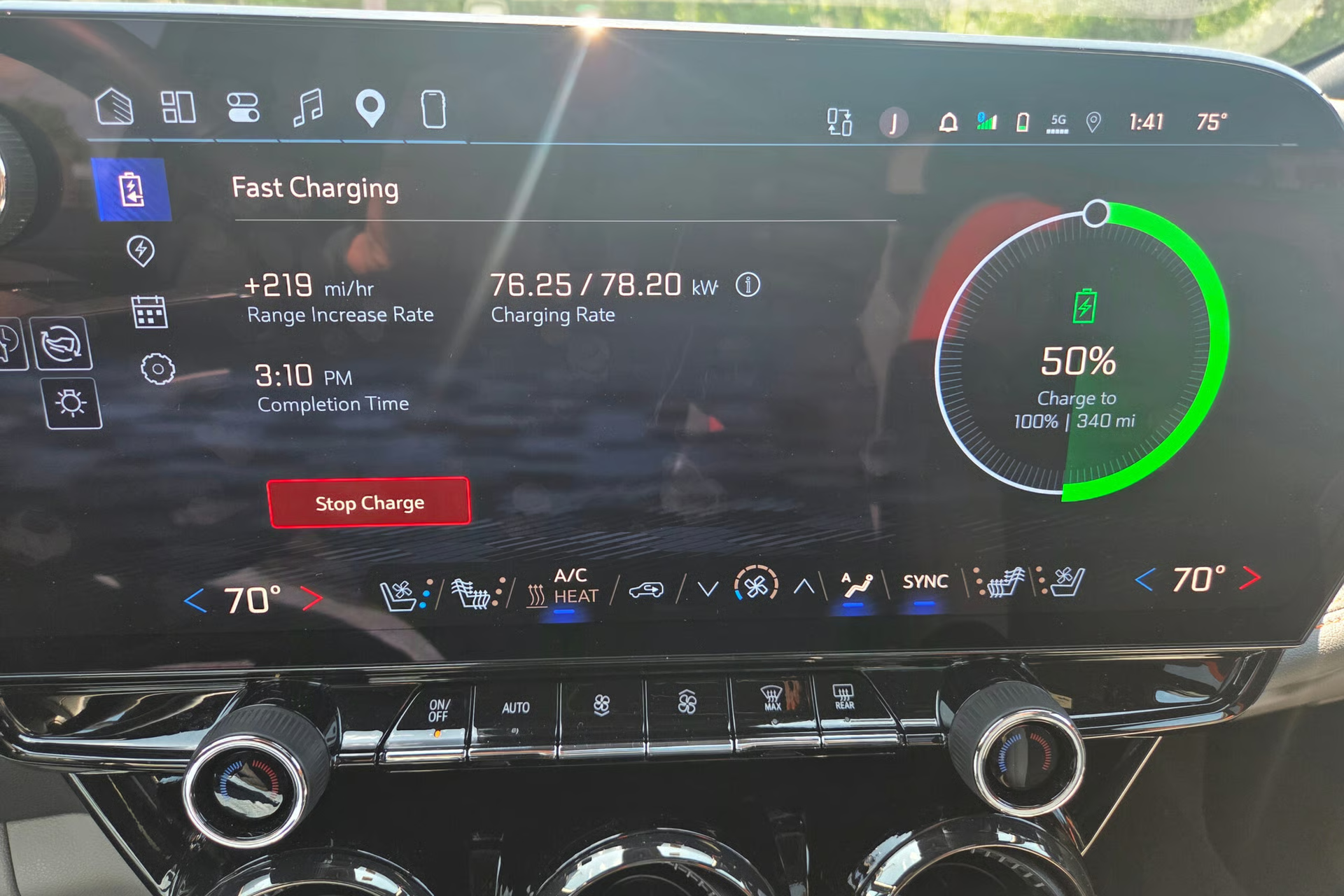

Hotter climate creeping throughout elements of the US might have an instantaneous impression on electrical‑car drivers.
Hotter temperatures make the chemical course of that electrical car batteries use to retailer power pace up, which is why with a lot of the nation rising from a chilly winter, EV homeowners are gearing up for a summer season with higher battery efficiency and shorter charging instances.
A 2024 research by Client Reviews discovered that EV batteries carry out 25% higher on vary when cruising at 70 mph in temperatures hotter than 20 levels. The group examined 4 fashions made by completely different producers in heat, gentle and chilly temperatures and located they achieved a mean of almost 243 miles on a gentle day with temperatures round 65 levels, in comparison with a mean of almost 182 miles on a battery cost in the identical driving circumstances on a chilly day with temperatures round 16 levels.
On a heat summer season day, the battery efficiency was even higher, with a mean of just about 265 miles on a battery cost.
Although to be truthful chilly climate impacting efficiency isn’t simply an electrical car drawback. The fuel mileage of a traditional gasoline automobile is about 15% increased at 77 levels than it’s at 20 levels, in line with the U.S. Division of Vitality.
Lower than 2% of the almost 300 million autos in the US are electrical, in line with Experian, so the issue isn’t affecting giant numbers of individuals. Additionally, the state with the very best gross sales continues to be California, the place heat climate is the norm. However that’s altering. U.S. electrical car purchases accounted for 7.8% of all new automobile gross sales in 2025, in line with a Cox Automotive report.
Most vehicles or vehicles do higher when it’s heat than they do when it’s freezing out, however electrical ones would possibly get the most important enhance. Right here’s why:
Why Do EV Batteries Cost Sooner and Final Longer in Heat Climate?
It’s effectively documented that colder batteries don’t work as effectively. The best working temperature for an EV battery is between about 68 and 86 levels, relying on the mannequin.
The electrochemical processes the battery makes use of to cost pace up because the temperature rises. To cost, the automobile first has to heat the battery, which requires time and power. Due to this, the battery takes longer to cost the colder it will get.
A battery costs when lithium ions saved within the cathode switch again to the anode. In hotter charging circumstances, the ions circulation extra effectively by way of the anode and the battery’s capability will increase.
Tips on how to Maximize Efficiency From an EV within the Spring and Summer season
1. Cost whereas your battery is heat. Most EVs in the present day routinely preheat their batteries once they know they’re heading to a charger. This enables them to cost shortly and effectively when plugged in. If you happen to cost at dwelling, take into account plugging in instantly whereas the car continues to be heat.
2. If you happen to can, park indoors — even within the spring and summer season. This retains your battery hotter, so not as a lot power needs to be used to heat it up later. A automobile cowl may assist.
3. Flip off your air conditioner whilst you cost, and use it sparingly whereas driving. Utilizing your A/C whereas your EV is charging is mostly thought of secure, nevertheless it would possibly decelerate your battery’s general charging time.
Additionally, in line with information from the web site Recurrent, the impression of working the air-con in your EV in the course of the summer season is negligible till outdoors temperatures hit over 80 levels Fahrenheit. However as soon as it will get hotter than that, they discovered the next impacts:
- Vary loss at 80 levels throughout a number of fashions was about 2.8%
- Vary loss at 90 levels was about 5%
- Vary loss at 100 levels was primarily based on extraordinarily restricted information, however may very well be 31%
4. Be sure your tire stress is appropriate. Underfilled tires lead to elevated rolling resistance in any climate, which implies it takes your car extra power to maneuver ahead. The issue is more likely to be extra acute in colder climate, however you need to nonetheless regulate your tire stress within the spring and summer season.
5. Drive with eco-mode on. Most EVs provide this, which requires the least quantity of power whereas sacrificing some efficiency.
6. Don’t let your battery get beneath 20%. Your battery will want energy simply to heat up sufficient to cost, which occurs extra shortly within the spring and summer season than it does within the winter. But when it will get too low you won’t be capable of cost even in case you’re plugged in.
Stephen Beard contributed to this report.