Unique: US authorities lab is probing Chinese language-made lidar for safety vulnerabilities | TechCrunch

A Division of Power lab is investigating whether or not Chinese language lidar sensors may pose a safety threat in the event that they grow to be broadly used on autos in america, TechCrunch has realized.
The assessment is being carried out by the Idaho Nationwide Laboratory, based on two folks conversant in the hassle, who had been granted anonymity to debate it. The lab has stated the analysis is being funded by an organization — or a bunch of firms — within the electrical and autonomous automobile industries, the sources instructed TechCrunch.
It’s not instantly clear which firms are supporting the assessment. Representatives for Rivian, Common Motors, Ford, Kodiak, Lucid Motors, Nuro, and Uber – firms which might be reported to be contemplating Chinese language lidar – instructed TechCrunch they weren’t conscious of the assessment. Nvidia, Zoox, and Aurora didn’t reply to questions on whether or not they’re concerned.
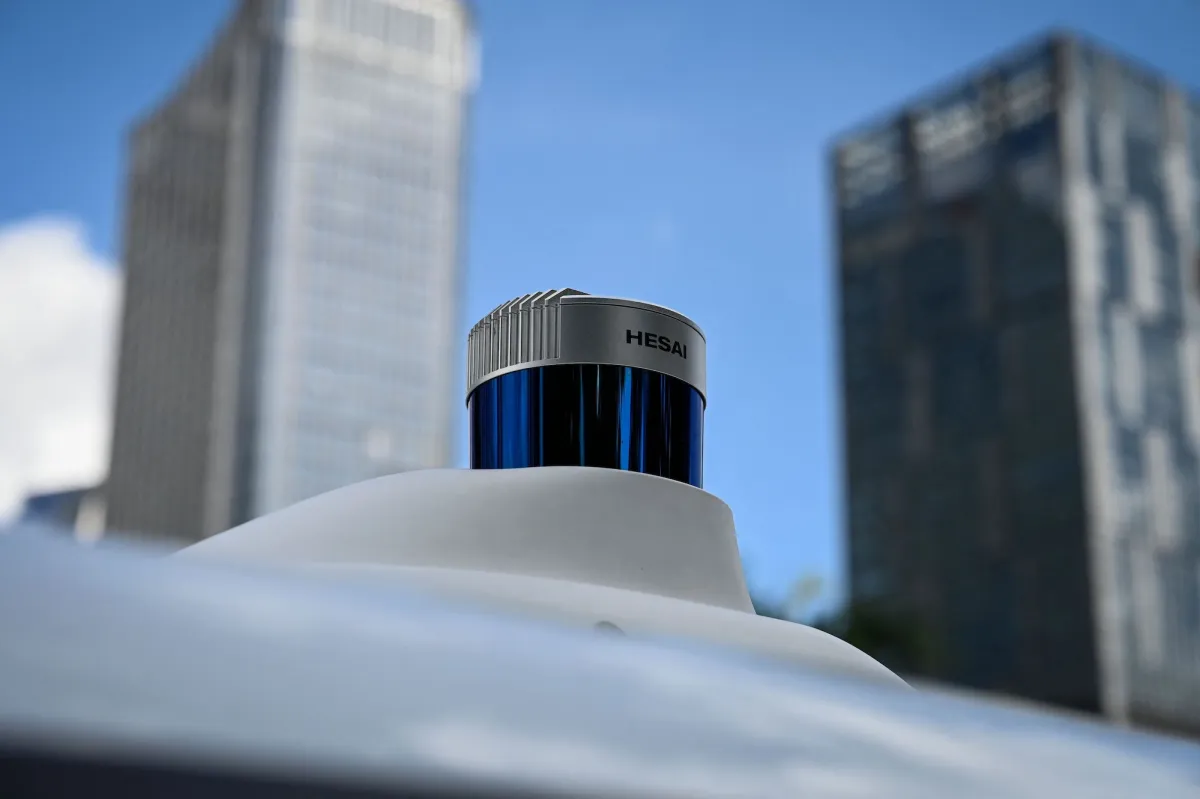
Idaho Nationwide Laboratory declined to touch upon the assessment. A spokesperson instructed TechCrunch in June, and once more in July, that “this isn’t a undertaking that we’re at liberty to debate with reporters.” China’s main lidar suppliers, Hesai and RoboSense, didn’t reply to a number of requests for remark.
Lidar, which stands for gentle detection and ranging, is a sensor expertise that makes use of laser pulses to measure the gap to close by objects. It has lengthy been a preferred software for firms engaged on autonomous autos as a result of it affords a high-resolution image of a self-driving automobile’s speedy environment.
The assessment is underway as strain mounts to ban using Chinese language LiDAR sensors on American roads, with lawmakers crafting a number of payments.
Senator Tammy Baldwin (D-WI), who’s spearheading the Securing Infrastructure from Adversaries Act with Senator Ted Budd (R-NC), instructed TechCrunch in an announcement that she’s primarily involved about Chinese language lidar getting used for navy or industrial espionage.
“As infrastructure turns into extra refined, the risk Chinese language LiDAR expertise poses to American communities and our nationwide safety can’t be allowed to go unchecked,” she stated. “We have to be doing extra to guard Individuals and that begins with guaranteeing taxpayer {dollars} aren’t getting used to buy applied sciences that might be used to spy on us.”
Congressman John Moolenaar (R-MI), who’s co-sponsoring a special invoice aimed toward banning using Chinese language lidar, instructed CNBC final month that he’s involved “again doorways” may “transmit info again to those Chinese language Communist pursuits.”
Value over issues?
There are totally different layers of threat with regards to utilizing Chinese language lidar, based on Omer Keilaf, CEO and co-founder of Israeli lidar firm Innoviz.
The primary is fundamental provide chain threat. Keilaf – who stated he wasn’t conscious of the Idaho Nationwide Laboratory assessment till TechCrunch requested him about it – stated that China’s authorities has deemed lidar to be a strategically vital expertise.
“So, if, for instance, an OEM now builds its complete autonomous driving stack based mostly on a Chinese language provide chain, that’s an enormous threat down the street,” he stated in a latest interview.
The assessment is extra targeted on the cybersecurity dangers, although – and presumably on giving Chinese language-made lidar a clear invoice of well being on this space, based on the 2 folks conversant in it.
Keilaf described two main cybersecurity dangers that Chinese language lidar may current. One is that the sensors might be disabled en masse, disrupting autos in movement and bricking ones that aren’t.
Researchers have proven previously that particular person lidar sensors may be disabled utilizing lasers. Nevertheless it’s not apparent how China may trigger a widespread disruption of lidar sensors being actively utilized by robotaxis.
Keilaf additionally stated it’s attainable to compress the finely detailed information that lidar sensors gather about their environment and transmit that information through a mobile chip.
“As an individual that spent seven years within the within the [Israeli] intelligence pressure, I can guarantee you, it’s not very tough to extract that info. Finally, the quantity of information that the lidar is producing is fairly simply compressed if somebody desires to,” he stated.
These issues are related now as a result of the price of lidar has come down dramatically within the final decade.
Lidar has historically been far costlier than different sensors like radar or cameras. Tesla has eschewed it altogether, with CEO Elon Musk calling it a “crutch” and preferring to construct his firm’s complete autonomy stack round cameras alone.
However Chinese language firms like Hesai and RoboSense have rapidly scaled and lowered costs, bringing the price of a product that price as a lot as $75,000 a decade in the past right down to only a few hundred bucks in some instances.
American lidar firms have tried to maintain tempo, nevertheless it’s tough to match China’s economies of scale and decrease prices of labor and capital. In consequence, U.S. lidar makers have spent the previous couple of years consolidating or, within the case of Luminar, submitting for chapter.
This has prompted a number of automakers and autonomous automobile firms within the U.S. to think about using Chinese language lidar sensors as a part of their autonomous automobile sensor suites.
Rivian, which is planning to make a model of its new R2 SUV with a lidar sensor built-in into the roof, is reportedly a type of firms.
In March, CEO RJ Scaringe instructed Reuters the corporate is contemplating making its personal lidar sensors within the U.S. by leveraging Chinese language tech, presumably as a part of a three way partnership, based on the outlet.
“A quantity of various automobile producers are occupied with how they might do this both collectively, or a minimum of by a shared alignment to say, hey, let’s develop manufacturing capability within the United States for this, or a minimum of outdoors China,” Scaringe stated on the time, noting the corporate was in “energetic discussions” with lidar corporations and that the hassle may also embody different automakers.
Rivian’s chief monetary officer later stated the corporate has no plans to carry lidar improvement in-house.
U.S. firms are allowed to make use of Chinese language-made lidar, however the future regulatory panorama isn’t clear. The Division of Protection has positioned each Hesai and RoboSense on its so-called 1260H listing for allegedly supporting the Individuals’s Liberation Military, a designation that restricts their skill to work with the U.S. navy.
In 2025, the Commerce Division applied a rule that prohibits using Chinese language-made connectivity {hardware} in U.S. passenger vehicles, however lidar and different autonomous automobile sensors are usually not prohibited.
Lawmakers like Congressman Raja Krishnamoorthi (D-IL), who launched the invoice Moolenaar is co-sponsoring, have spent years warning that widespread adoption may make it attainable for China to “collect delicate information or disrupt our programs.”
For now, issues about widespread disabling of Chinese language lidar stay simply that – issues. However there may be a minimum of one incident that gives a glimpse of what such a disruption would appear like. In early 2024, prospects utilizing Hesai lidar sensors noticed their autonomous autos instantly cease working for a whole day as a result of the corporate had not correctly accounted for the additional day of the intercalary year.
While you buy by hyperlinks in our articles, we could earn a small fee. This doesn’t have an effect on our editorial independence.